Agastheeswarar Trust brings people, traditional knowledge and scientific methods together to care for water, land and community wellbeing. We support food and education needs through partners and are developing village projects that save resources and measure the results.
In every project we ask: what does this save, and what does it bring back: water, soil, clean air, shade or open land?
Project proposal, looking for a partner · Water, with Earth and Space
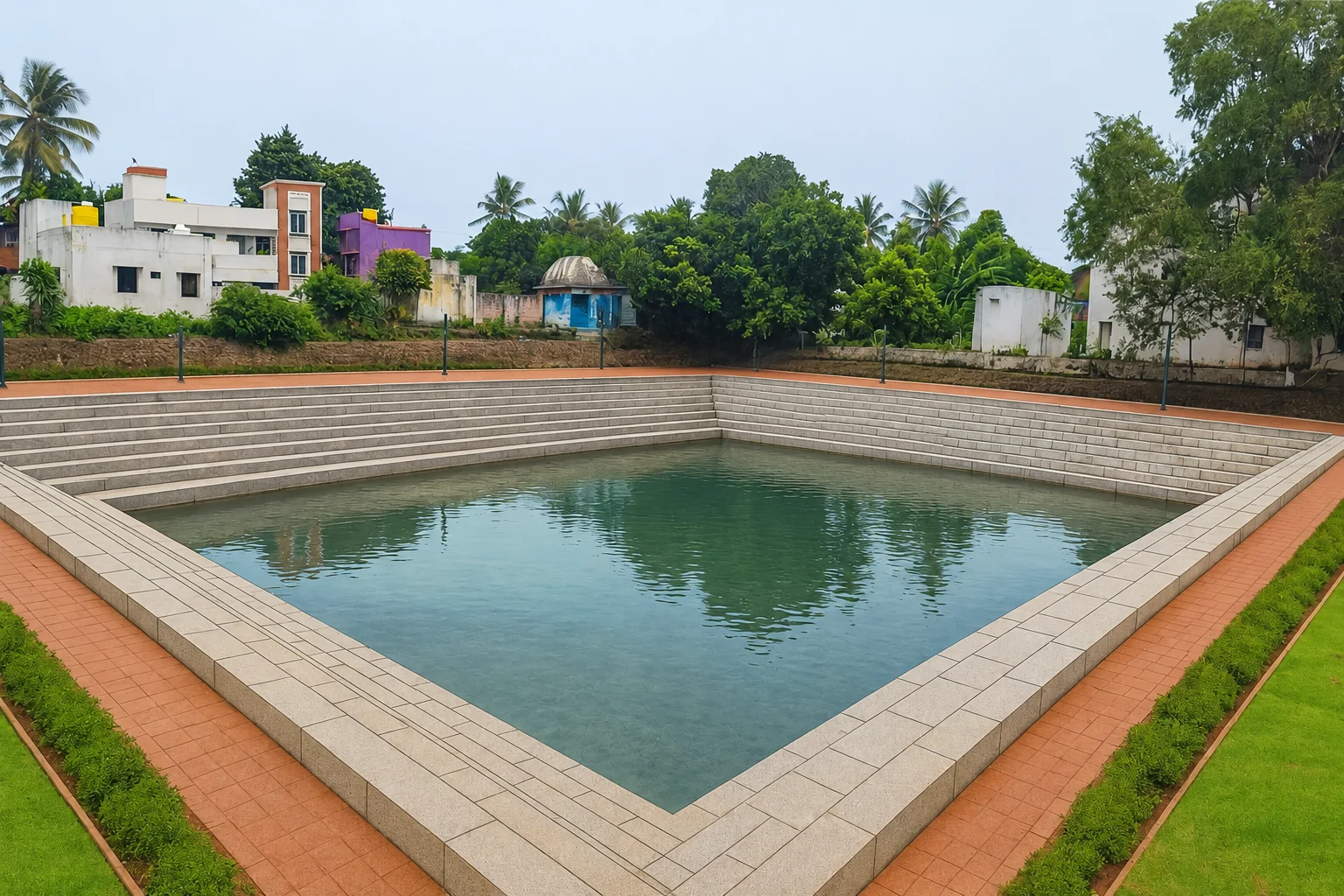
Bringing village tanks back to life
For centuries, every village had a tank. It held the monsoon rain and filled the wells around it for months. Tamil Nadu still has more than 30,000 of them. Many are silted, blocked or shrinking.
Our first tank: Panchetti, Tiruvallur district. The village's taps all depend on borewells. There is no simple, shared record of how the wells change each summer. The tank project can start one.
Where we are, honestly. This is a project proposal, and we are looking for a partner to take it forward. The full work will cost about ₹1.4 crore. It can start small: a water baseline, a tank user committee and a first season of measuring. Then desilting, inlets and bund repair, in phases, as funds come in.
What success looks like: more water stored, wells steady or rising before the monsoon, no month without drinking water, and a village committee that runs the tank on its own.
Many tree drives count saplings planted. We will count trees still alive after three summers. We plan to plant native species on tank bunds, school grounds and roadsides. Each tree will have a named guardian, who shares the fruit, leaf and shade.
Waste that is burnt becomes bad air. Waste in drains becomes bad water. A repair saves the energy used to make something new. We plan to help homes see what they throw away, hold monthly repair days, compost, and keep waste out of tanks. We hope to work with local health centres on heat, air and water awareness. Siddha ideas are shared as concepts worth trying, never as treatment.
Space and all five
Children who measure their village
In a school balance club, students will check a well, count trees, log hot days and track waste. They learn science by doing it, and they take it home.
All five
No one left behind
Sharing is part of balance. Those who can share, share. Those in need get a fair share. With partners, we give food, meals and education support to people who need it.
Alongside our long-term work towards sustainable communities, we support focused initiatives through partners to meet immediate needs with dignity.
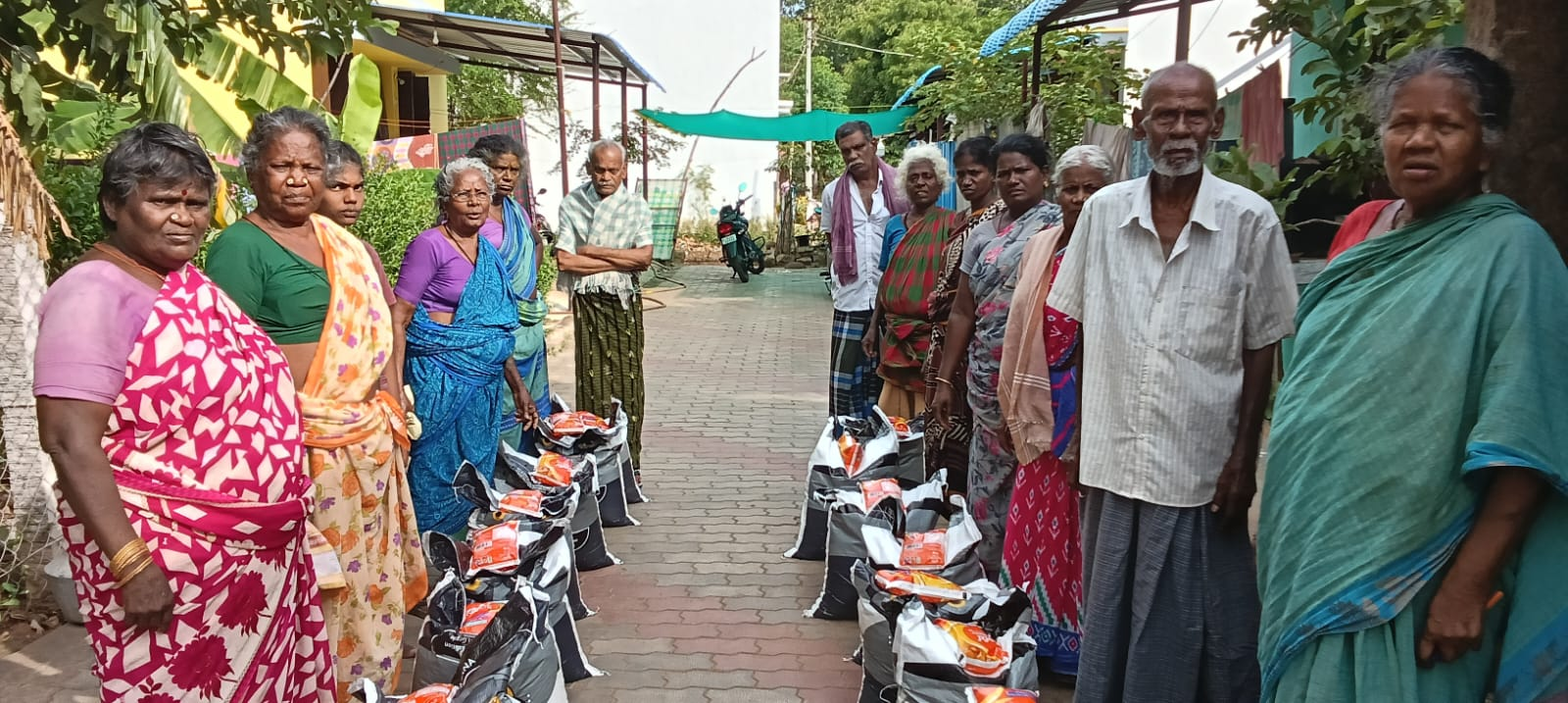
Food supplies for home cooking, distributed through partners.
Food supplies for families affected by leprosy
Through partner organisations, we provide one month’s food supplies for 10 families affected by leprosy, enabling them to cook at home. This focused support helps meet an essential household need while respecting each family’s dignity.
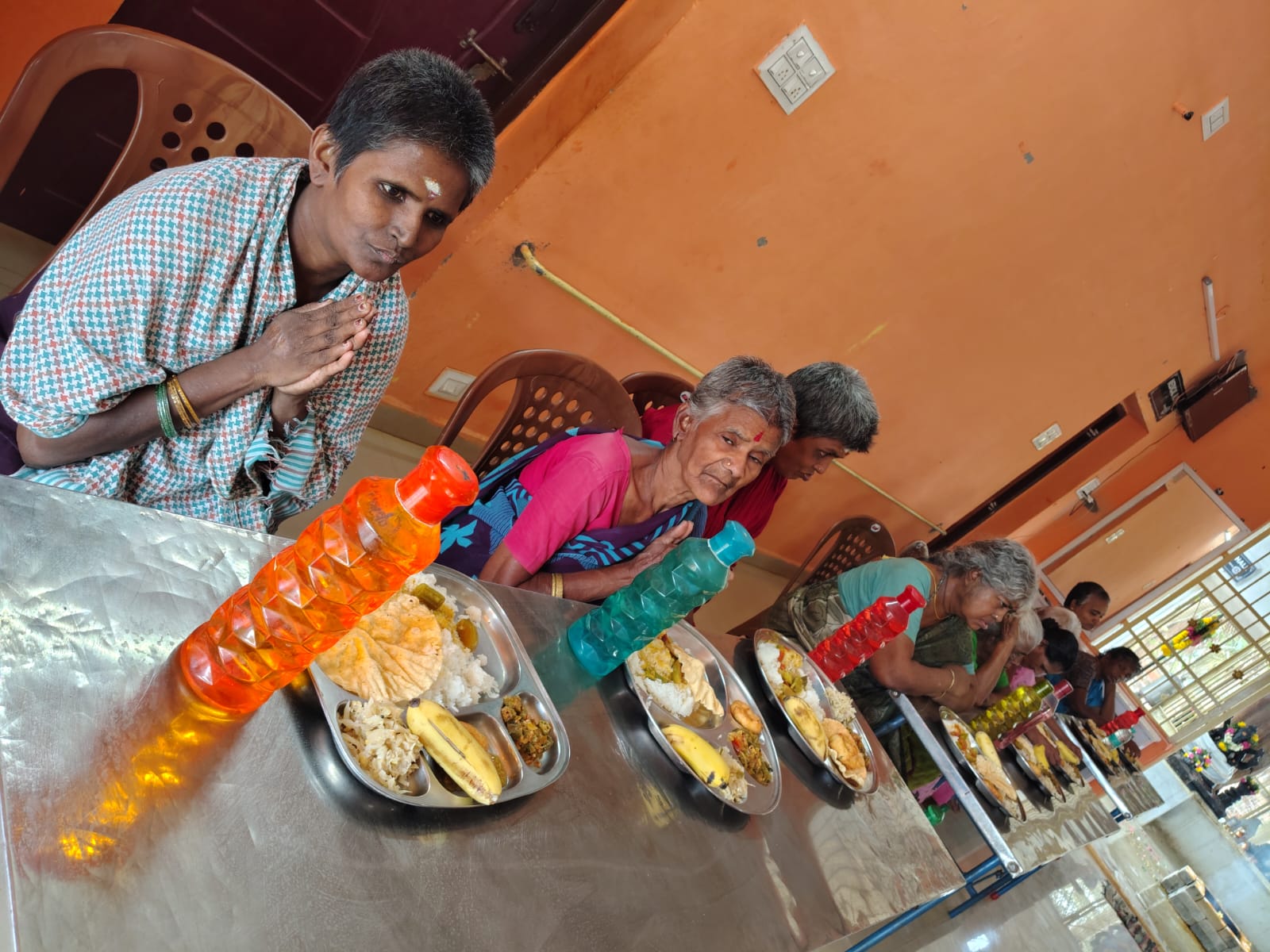
Partner-led meal support for older people.
Meals for older people in need
We support meals for older people who lack adequate family or financial support, through partner-led arrangements. Contributions help meet an everyday need with dignity, according to the needs identified by the partner organisation.
Education assistance
Education support for students who are blind
Through partners, we provide financial support to help students who are blind pursue educational certifications. Assistance is coordinated around individual learning needs and available resources, supporting skills, confidence and greater independence.
Heritage
In progress
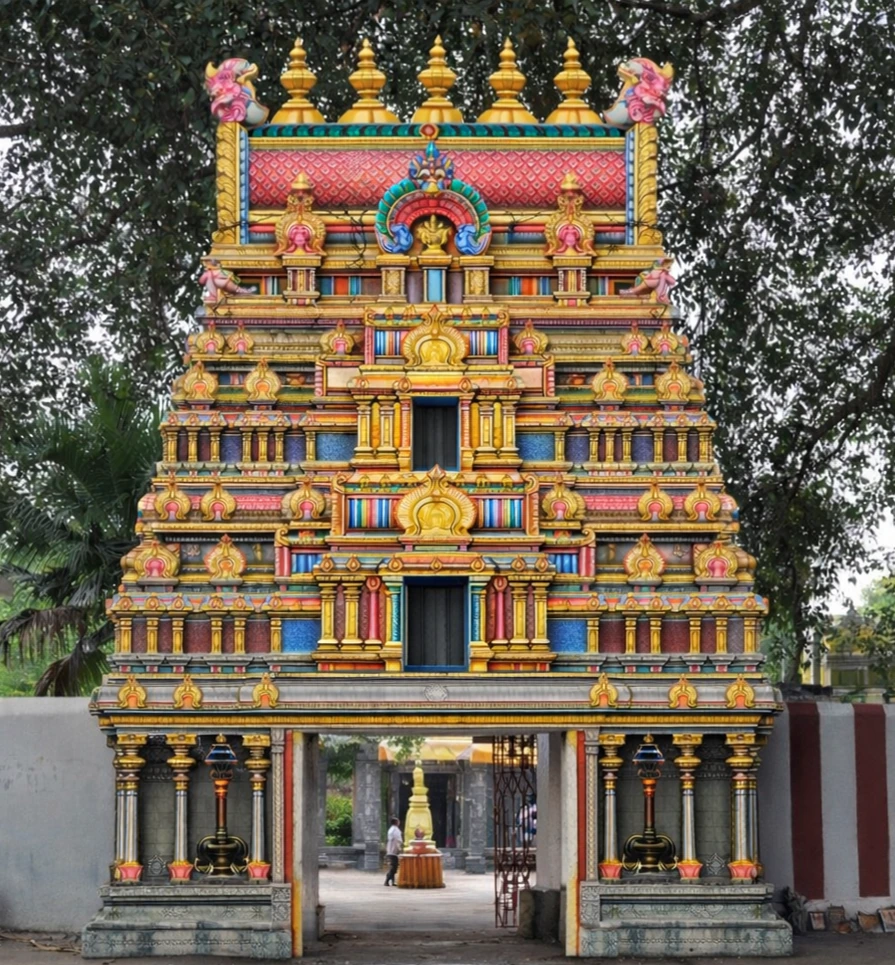
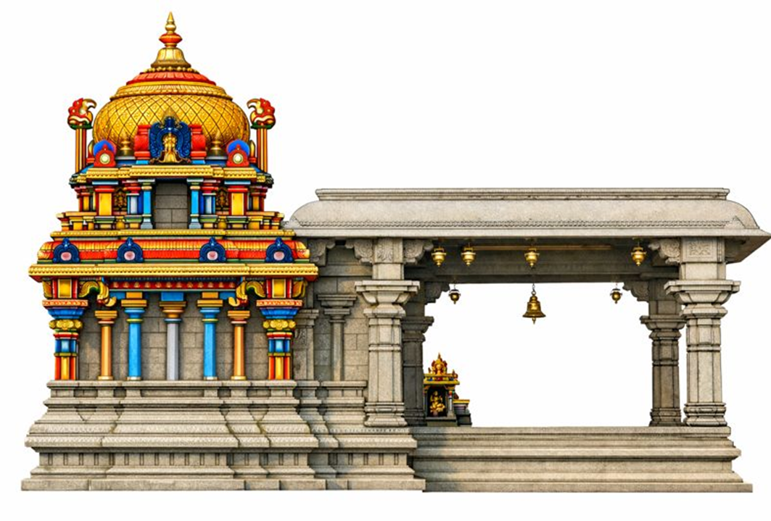
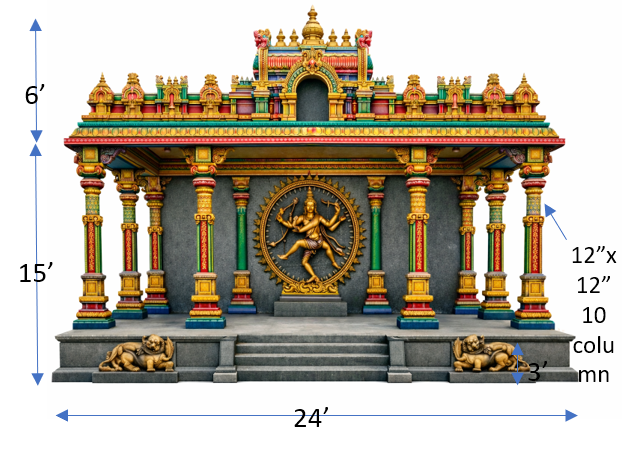
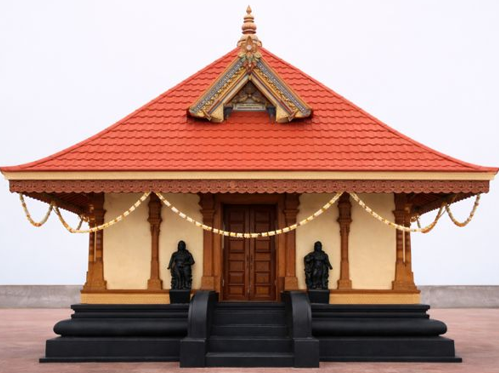
Completing the Nedungundram heritage temple
The renovation of Sri Arulmigu Agatheeswarar Tripura Sundari Ambal temple at Nedungundram is in progress. The work so far was funded by devotees and well-wishers before the trust was formed.
The trust will help see this one project through to completion. It is our only heritage temple project. Our future work is on water, land, health and awareness.
Polluted air was linked to about 21 lakh deaths in India in 2021.
Heat
Heat-related deaths keep rising, and outdoor workers lose working hours to it.
Water
India’s 2025 groundwater assessment classifies 730 of 6,762 assessment units as over-exploited. Local conditions differ, including within states. Source: CGWB, assessment year 2025.
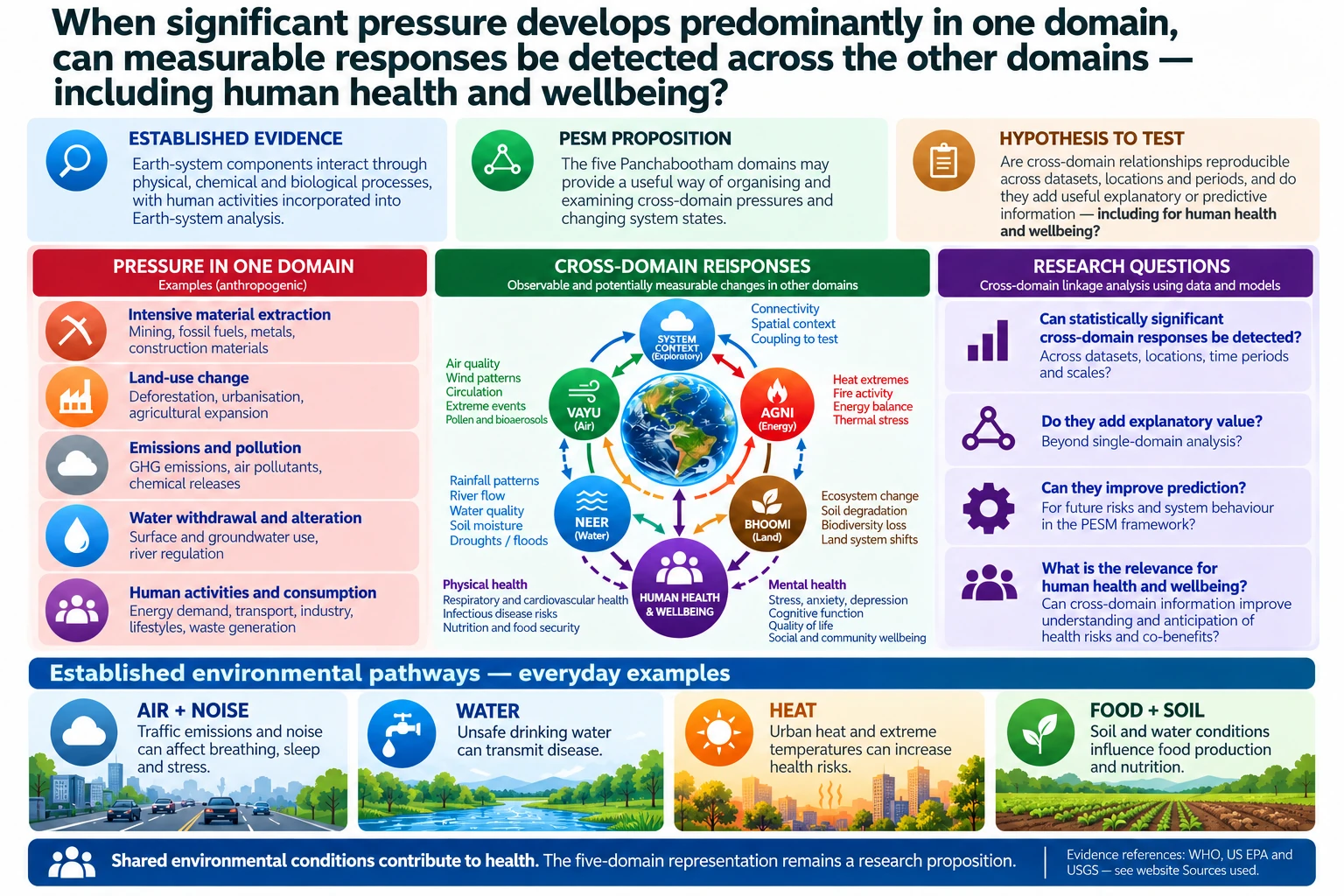
These are not separate problems. Cutting trees, burning waste and pumping too much water make all of them worse.
Our health: what the numbers say
More than 100 crore people worldwide live with a mental health condition. Unsafe water, poor sleep, noise and loneliness add to the strain on body and mind.
Much of this is shaped by the world around us: the water we drink, the air we breathe, the heat we live in, and the room we have to rest. Those are the five elements.
State of Global Air 2024 · Lancet Countdown 2025 · WHO 2025 · CGWB 2025 (India) / 2024 (Tamil Nadu)
Our planet: Earth is being overdrawn
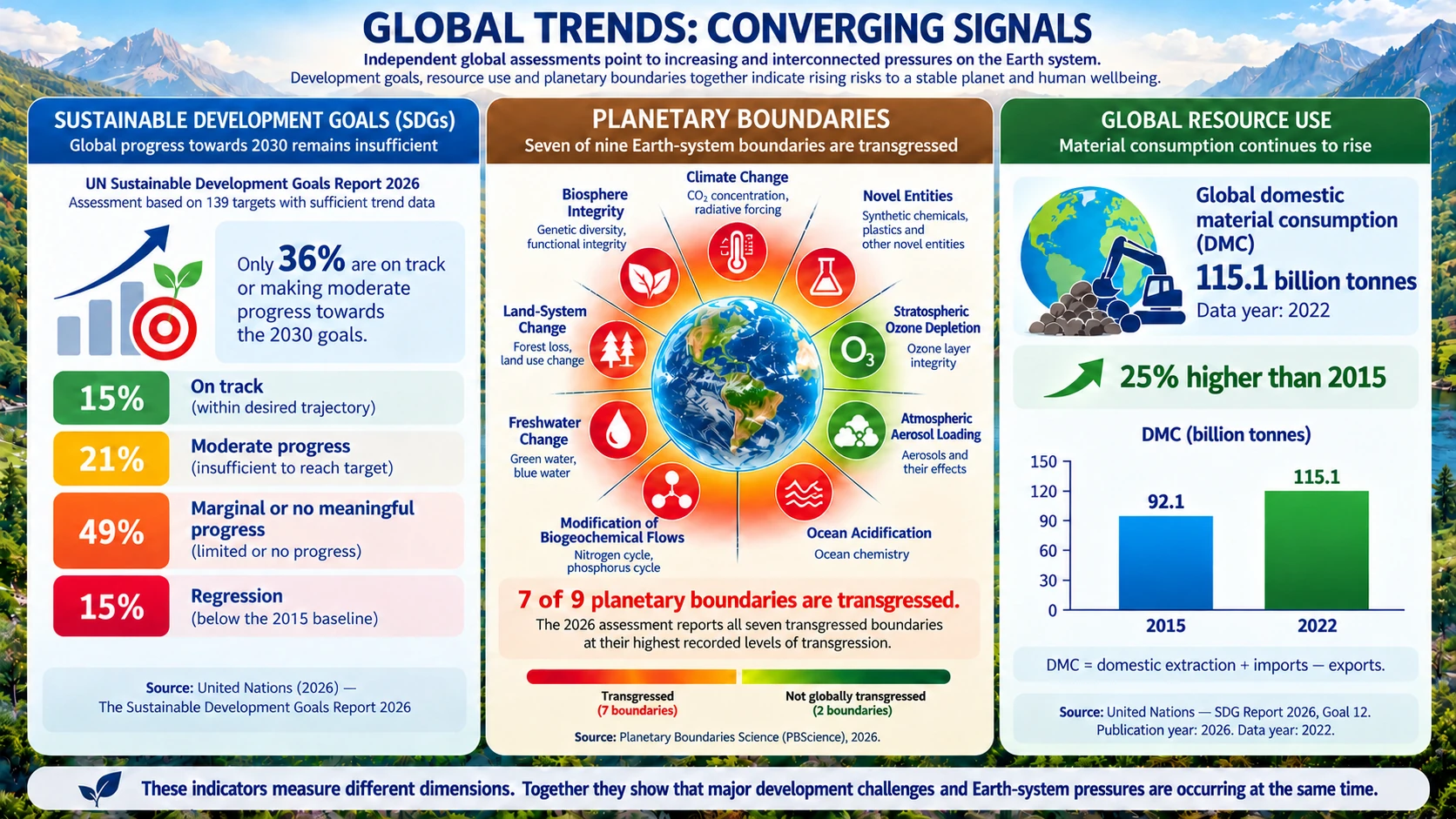
Global evidence explains why action matters. The UN SDG Report 2026 finds 15% of 139 assessed targets on track and 21% making moderate progress. Planetary Health Check 2026 reports seven of nine boundaries transgressed. WWF’s Living Planet Report 2024 reports a 73% average decline in monitored vertebrate population sizes during 1970–2020, not a count of all animals lost. Global Footprint Network estimates demand equivalent to 1.73 Earths in 2026, with Earth Overshoot Day on 30 July. This ecological-footprint measure is not a measure of every mineral, fossil fuel or freshwater stock.
India, state by state
Every state is strained in a different way. Some are short of water. Some are short of trees. Some breathe the worst air. Find your state below.
Compare selected states: groundwater, green cover and air
Official figures. Groundwater: share of yearly recharge that is drawn (above 100% means more is drawn than the rain puts back). Green cover: forest and tree cover, goal 33%. Air: yearly average fine dust (PM2.5), Indian limit 40.
State
Water groundwater drawn, %
Earth and space green cover, %
Air PM2.5
Punjab
157
6.6
49.6
Rajasthan
150
8
38.3
Haryana
136
7.5
58.7
Delhi
101
25
88.4
Tamil Nadu
74
24.5
22.5
Uttar Pradesh
70
10
56.2
Karnataka
68
24.5
21.4
Madhya Pradesh
58
27.8
36.8
Gujarat
54
11
29.5
Kerala
54
64.3
18.5
Uttarakhand
54
47.7
33.2
Maharashtra
53
21.2
33.9
Odisha
48
37.6
36.4
Chhattisgarh
47
46.1
51.5
Telangana
46
22
29.3
West Bengal
46
22.3
46.9
Bihar
46
10.5
60.1
Himachal Pradesh
35
29.5
24.5
Jharkhand
31
34.4
42.1
Andhra Pradesh
30
21.7
26
Assam
13
38.8
28.4
All India
60
25.2
–
Compare selected states: groundwater, green cover and air. CGWB 2024 · ISFR 2023 · AQLI 2025 / 2023. PM2.5: µg/m³; India annual limit: 40. Groundwater: extraction / annual extractable resources × 100%.
Where we work first
Tamil Nadu in depth
Tamil Nadu’s 2024 assessment records extraction at 74.26% of annual extractable groundwater resources, with 392 of 1,202 firkas classified as over-exploited. This percentage is not simply rainfall recharge. We plan fieldwork here and will examine local conditions before choosing interventions.
Growth, planned at the pace Earth can recover.
Growth matters. We ask that every growth plan move at the pace Earth can recover. If we pump faster than the rain refills, even a cleaned tank runs dry. If no one waters a sapling, it dies in its second summer. Doing things more efficiently helps. But efficiency alone cannot keep pace if our wants keep growing.
Our principle
Our approach to connected living
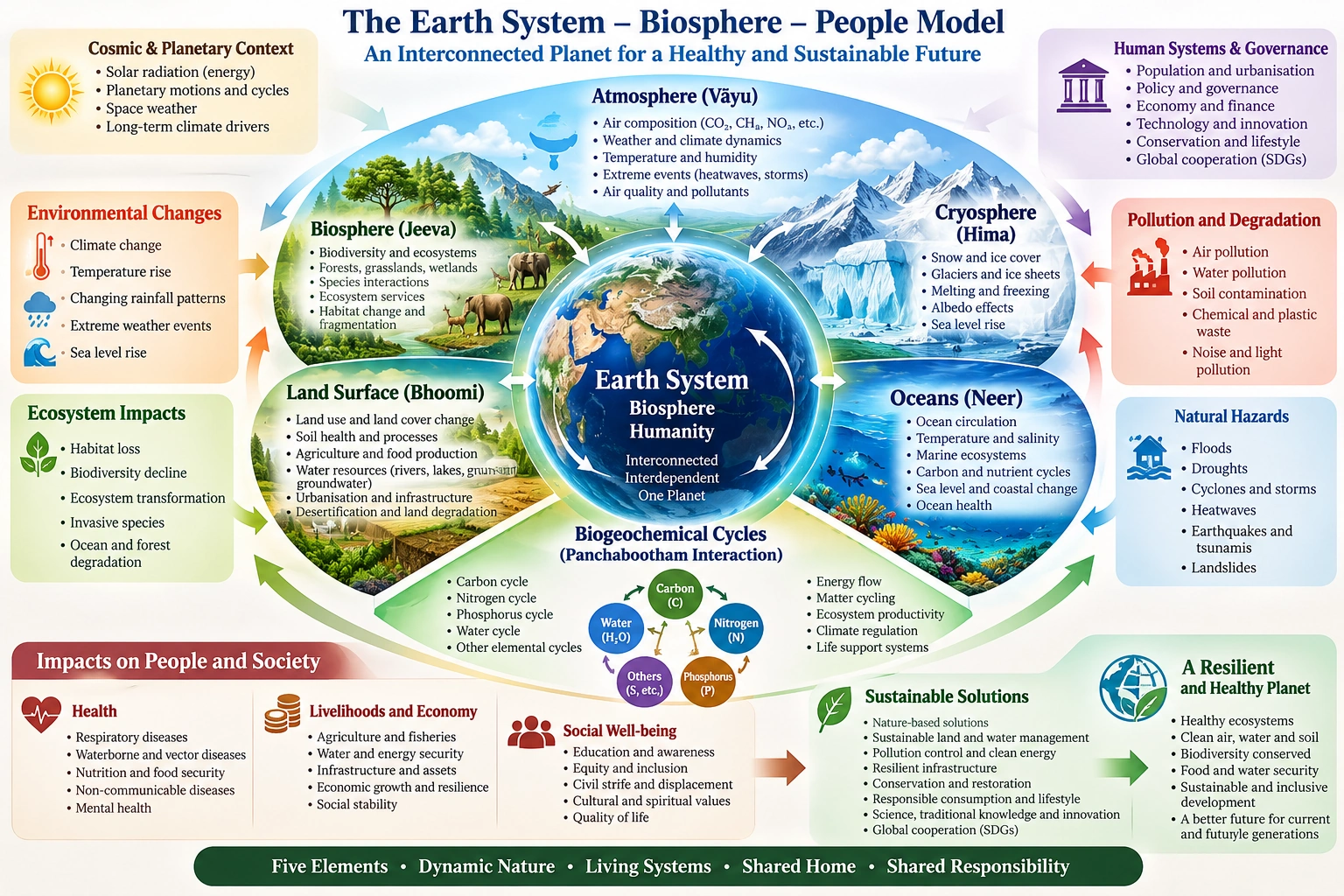
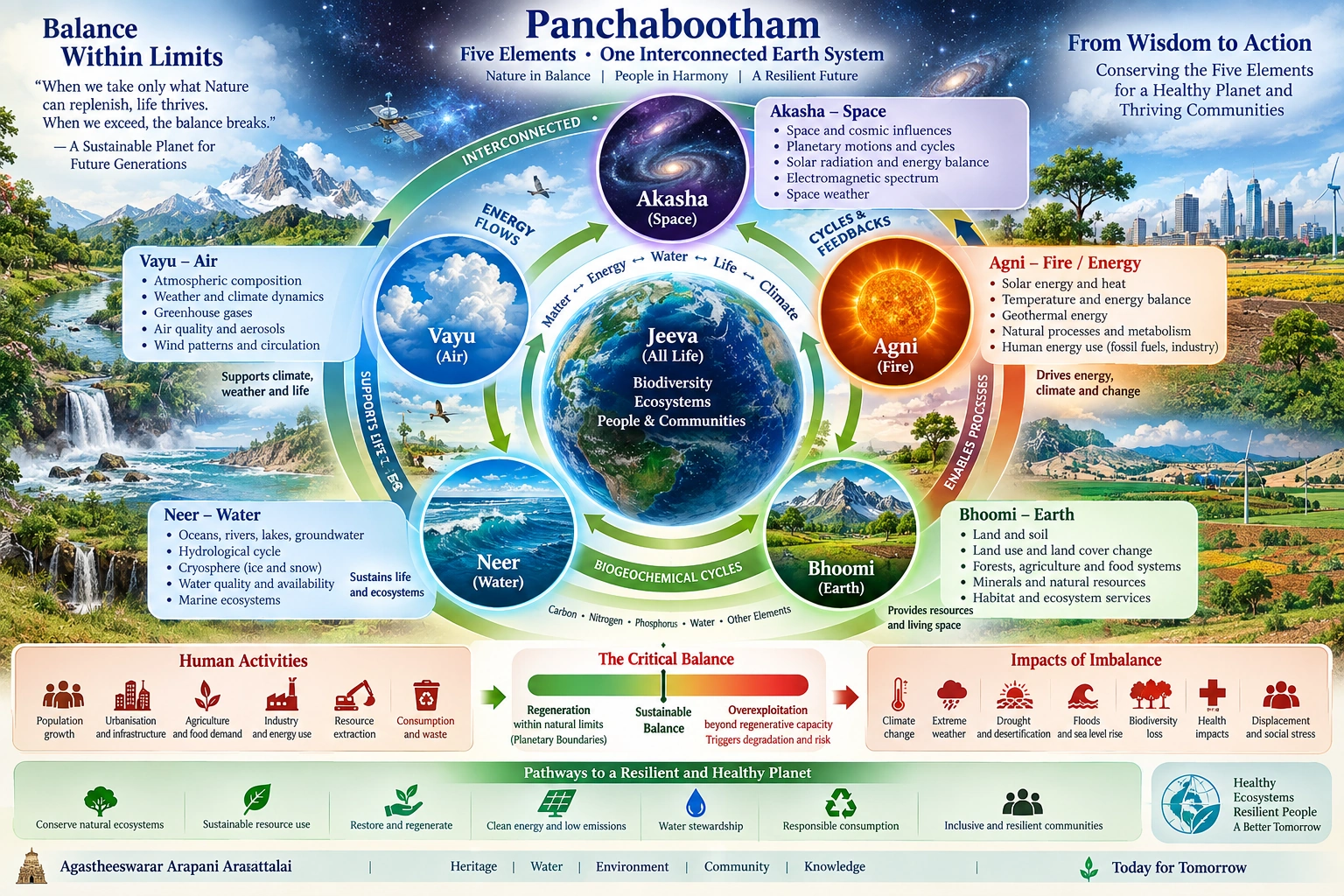
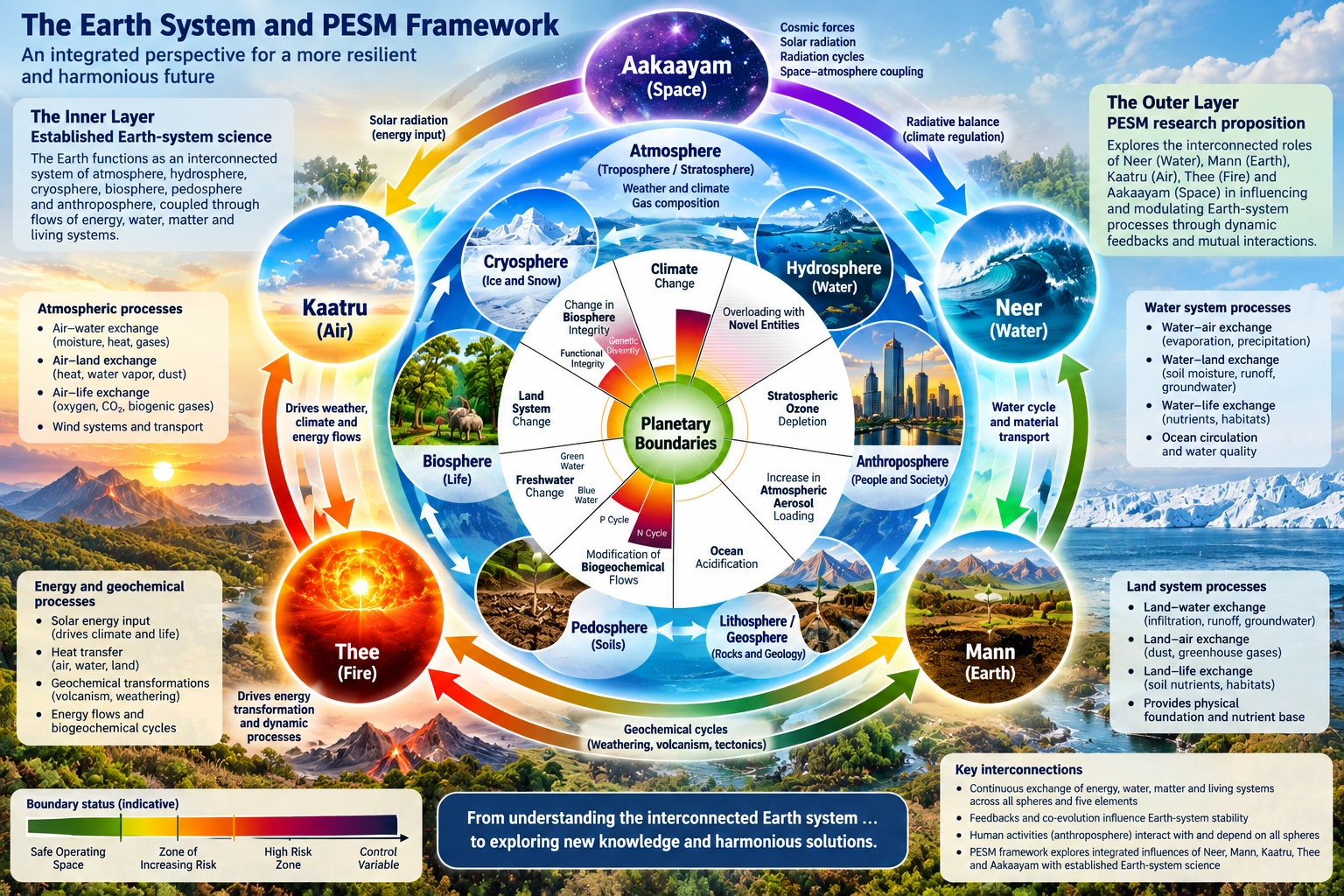
Panchabootham offers a traditional way to understand our relationship with nature. PESM brings this perspective into a framework for examining water, soil, heat, air, ecological capacity, living beings and human choices together. Our aim is to support wellbeing while reducing pressure on resources.
Traditional interpretation: the element and body associations illustrate the Trust’s reading of Siddha sources. They are not measured physical compositions or modern anatomical classifications.
Element
Around us
In us
Earth (நிலம்)
Soil, food, materials
Bones, flesh
Water (நீர்)
Rain, rivers, tanks, groundwater
Blood, fluids
Fire (தீ)
Sun, heat, energy
Digestion, body warmth
Air (காற்று)
Wind, the breath of the land
Breath
Space (ஆகாயம்)
Room for water, trees and life
Room to rest, think and heal
Our approach to connected living
As in the world, so in the body
Panchabootham offers a traditional way to understand our relationship with nature. PESM brings this perspective into a framework for examining water, soil, heat, air, ecological capacity, living beings and human choices together. Our aim is to support wellbeing while reducing pressure on resources.
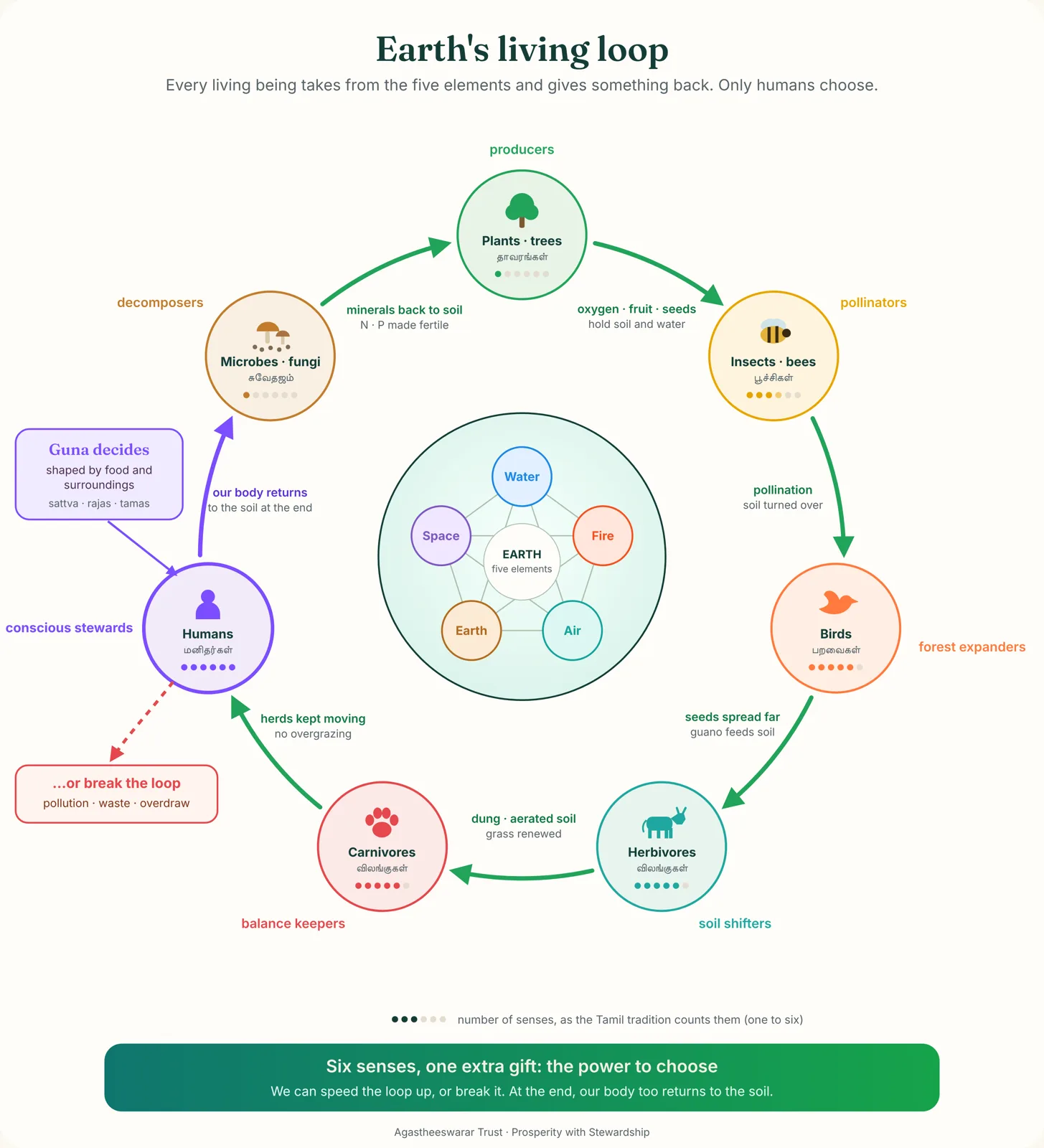
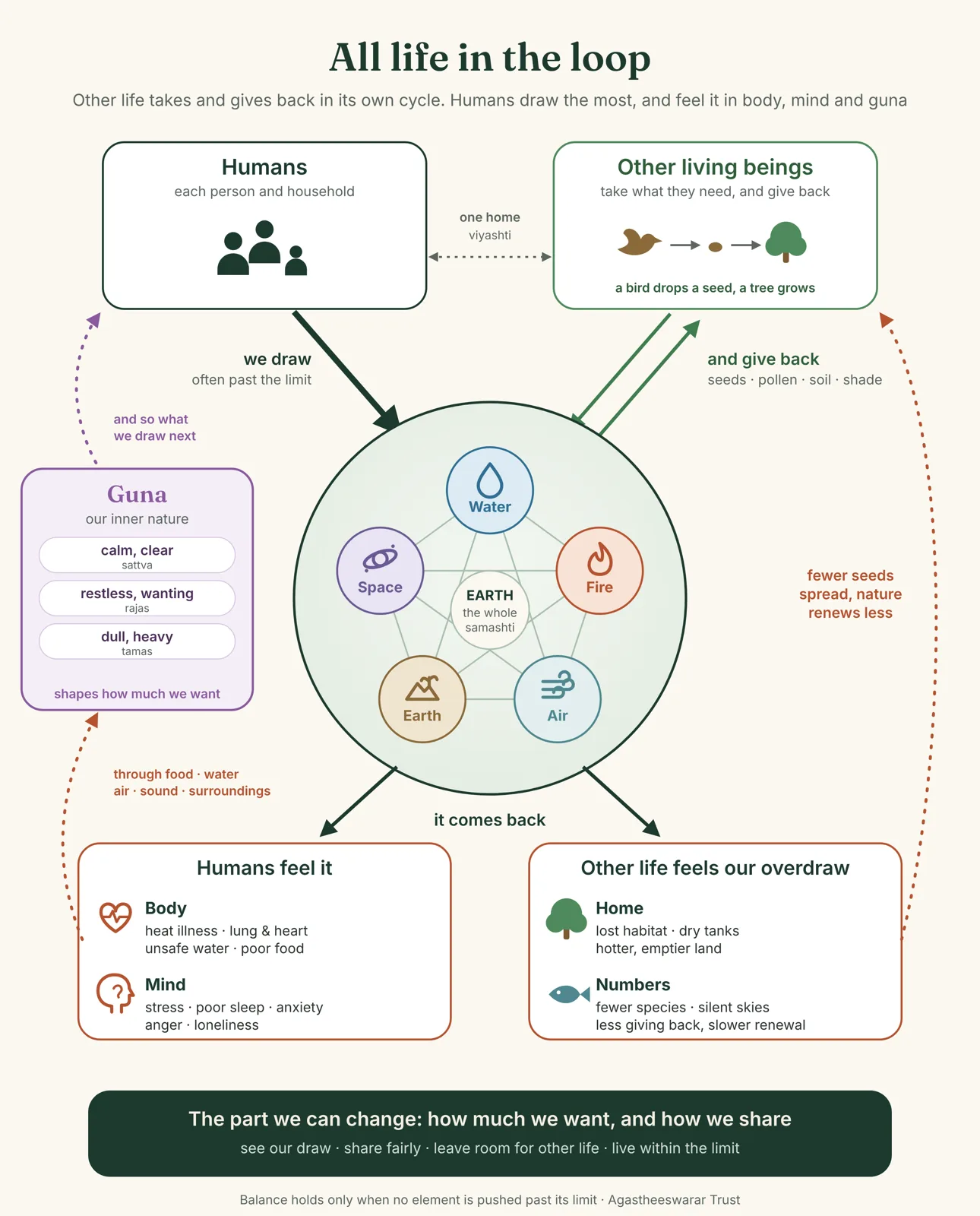
All life gives back. Do we?
We distinguish releases such as smoke and wastewater, depletion of stores such as groundwater and materials, and structural changes such as land conversion. Each calls for different action: emission limits, resource budgets or protection of shared land and habitat. Restraint, fair sharing and restoration connect these actions.
Our application is being refined through continuing study and interpretation of traditional verses, scientific evidence and field measurements. Practical projects and transparent evaluation are central to this work.
Panchabootham: qualities, Panchikaranam and the collective–individual relationship
Panchabootham approaches everyday life through five principles: space, air, fire, water and earth. Every breath connects us with air. Drinking water, food, warmth and room to live connect us with the world around us.
Panchikaranam. In the traditional account, each element carries half of its own nature and a share of the other four. Each has its own character, yet all are mixed.
Samashti and vyashti. Samashti is the whole: Earth, a state, a village. Vyashti is the part: a household, a person. Harm and healing travel both ways between them.
Gunas. Sattva (calm and clear), rajas (restless and wanting) and tamas (dull and heavy) are qualities of nature in the traditional account. They give us a language to reflect on how we think and act.
Traditional interpretation: the element and body associations illustrate the Trust’s reading of Siddha sources. They are not measured physical compositions or modern anatomical classifications.
How we will work with a village: six steps
1 WALK AND LISTEN→2 FIND THE MAIN STRAIN→3 PLAN TOGETHER→4 ACT→5 MEASURE→6 SHARE
What happens at each step?
Walk and listen. Map water, soil, air, heat and open space with the people who live there. Find the main strain. Which element is under the most pressure? Plan together. Small fixes first, with what schemes already offer. Act. With volunteers, the panchayat and partners. Measure. The same numbers, every year, before the monsoon. Share. What worked and what did not, so the next village starts ahead.
We do not replace anyone. We stand beside them.
The Panchabootham Earth System Model (PESM) is the Trust’s integrated research-and-action framework, rooted in the Panchabootham tradition. It draws on Panchabootham as a traditional integrative lens and uses scientific data and field measurements to examine resource use, environmental conditions and community wellbeing. It complements government programmes and the SDGs by following effects across sectors and scales.
A principle we live by. A method we test.
Our application is being refined through continuing study and interpretation of traditional verses, scientific evidence and field measurements. Practical projects and transparent evaluation are central to this work.
Research
Open research for a living Earth.
We are preparing accessible working papers on water, heat, land, waste and wellbeing. The papers shown below are planned. We welcome contributions from volunteers and professionals and aim to publish methods, sources and findings openly.
Working Paper 1 · Coming soon
Village tanks and groundwater
Why a village with taps in every home can still be running out of water.
Working Paper 2 · Coming soon
Green cover and land
Counting trees alive, not trees planted.
Working Paper 3 · Coming soon
Waste, reuse, repair and health
What a village throws away comes back in its air and water.
Next in the series: India by five elements (every state, with Tamil Nadu in more depth) · Hotter, sicker, more anxious: is it all connected? · 1.7 Earths: what overshoot means for a village · Who takes care of the land? People and nature · Growth at Earth's pace.
PESM: Five Elements, One Earth
We plan to develop and evaluate this approach with partner villages in Tamil Nadu, beginning with the proposed Panchetti tank project. Field implementation and comparison studies are planned; results will be published as they become available.
The Panchabootham Earth System Model (PESM) is the Trust’s integrated research-and-action framework, rooted in the Panchabootham tradition. It draws on Panchabootham as a traditional integrative lens and uses scientific data and field measurements to examine resource use, environmental conditions and community wellbeing. It complements government programmes and the SDGs by following effects across sectors and scales.
The baseline connects five element domains, living beings and human choices across household, village and wider scales. Panchikaranam provides a traditional structural prior: 50% of its own element and 12.5% of each other element. These are not measured material fractions. The weakest-indicator rule is a scoring assumption to evaluate. Akasha retains its traditional meaning; capacity and habitat are practical indicators, not a scientific definition of Akasha. We distinguish releases such as smoke and wastewater, depletion of stores such as groundwater and materials, and structural changes such as land conversion. Each calls for different action: emission limits, resource budgets or protection of shared land and habitat. Restraint, fair sharing and restoration connect these actions.
For the proposed pilot, we plan baseline measurements and comparison villages over two monsoons. Indicators include water levels and quality, tank storage, tree survival, heat, air, waste and resource use. We will specify questions and methods in advance, account for rainfall and local differences, seek independent review and publish findings and limitations. Household wellbeing observations will require consent.
Our application is being refined through continuing study and interpretation of traditional verses, scientific evidence and field measurements. Practical projects and transparent evaluation are central to this work.
Help write the next paper
Volunteer research contributions will be scoped with the Trust. Guidance, review and authorship will reflect the work contributed and the support available.
How many tanks in your block are blocked or encroached?
How hot does one village street get in May?
How many trees from last year's planting drive are still alive?
What does one home throw away in a week?
What do the oldest farmers remember about the water table?
How we keep it honest
Public data and field records only. Every number has a source. Our own estimates are marked. Claims are written before results come in. We will invite an independent college to check our village results. We publish what fails too.
The baseline connects five element domains, living beings and human choices across household, village and wider scales. Panchikaranam provides a traditional structural prior: 50% of its own element and 12.5% of each other element. These are not measured material fractions. The weakest-indicator rule is a scoring assumption to evaluate. Akasha retains its traditional meaning; capacity and habitat are practical indicators, not a scientific definition of Akasha.
For the proposed pilot, we plan baseline measurements and comparison villages over two monsoons. Indicators include water levels and quality, tank storage, tree survival, heat, air, waste and resource use. We will specify questions and methods in advance, account for rainfall and local differences, seek independent review and publish findings and limitations. Household wellbeing observations will require consent.
We distinguish releases such as smoke and wastewater, depletion of stores such as groundwater and materials, and structural changes such as land conversion. Each calls for different action: emission limits, resource budgets or protection of shared land and habitat. Restraint, fair sharing and restoration connect these actions.
Learn
Reflect on your household’s resource use
Ten questions offer a starting point for reflection and practical action. The scores describe this exercise, not a validated environmental or health assessment. A low score highlights an area to explore; it does not establish a diagnosis or cause. Some actions depend on housing, income or shared facilities. Consider what is within your control and what needs community support. Answers remain on this page.
One page a month. In your language.
A short multilingual learning note is planned. Publication will begin when the content and review arrangements are ready.
Join a day of action
Pongal · World Water Day (22 March) · World Environment Day (5 June) · Earth Overshoot Day (late July) · the first monsoon tank walk.
Find your way in
Five minutes, five hours or five years. There is a place for you.
Earth has its own way to rebalance. Do we have one?
Our plan begins with households and village groups, then expands through evidence and local partnerships. We will share what works, what needs revision and what resources each step requires. Participation grows with project readiness.
One home checks its balance.
Five people form a village circle and fix one thing.
One village measures it for two monsoons.
One district copies what works.
One state, then the country, with the method free for anyone to use.
We plan to develop and evaluate this approach with partner villages in Tamil Nadu, beginning with the proposed Panchetti tank project. Field implementation and comparison studies are planned; results will be published as they become available.
Start a village circle
We plan to develop simple field guides, training and links to experts with partners. Availability will depend on the project and local arrangements.
For CSR teams: Our 12A and 80G applications are filed, and CSR-1 registration is in progress. Today we can work as the technical and field partner on a project you run as your own CSR, or through your foundation. We report against the Schedule VII head you choose.
Give
Support community wellbeing and responsible resource use
Contribute an amount of your choice through the existing payment page. Contributions support the Trust’s charitable work, including community support and village initiatives. For a specific project, agree its purpose with the Trust before contributing. Project delivery depends on funds, permissions and partners.
Continue to Razorpay to make a financial contribution.
Where your money goes
Funds are used only for the trust's public charitable objects, never for private benefit.
Every gift gets a receipt.
12A and 80G applications are filed. Tax-deduction receipts will be issued once approval is granted.
We will publish a yearly report with audited accounts.
We do not accept foreign contributions at present.
About us
A small trust with a big question.
Agastheeswarar Arapani Arakattalai is a registered public charitable trust in Nedungundram, Chennai. We started with one question: how do we keep growing as people, without breaking the Earth that holds us? Our starting point is Panchabootham, the five elements, put to work through water, trees, health, learning and sharing. Our work is open to all, without distinction of caste, religion, race or sex.
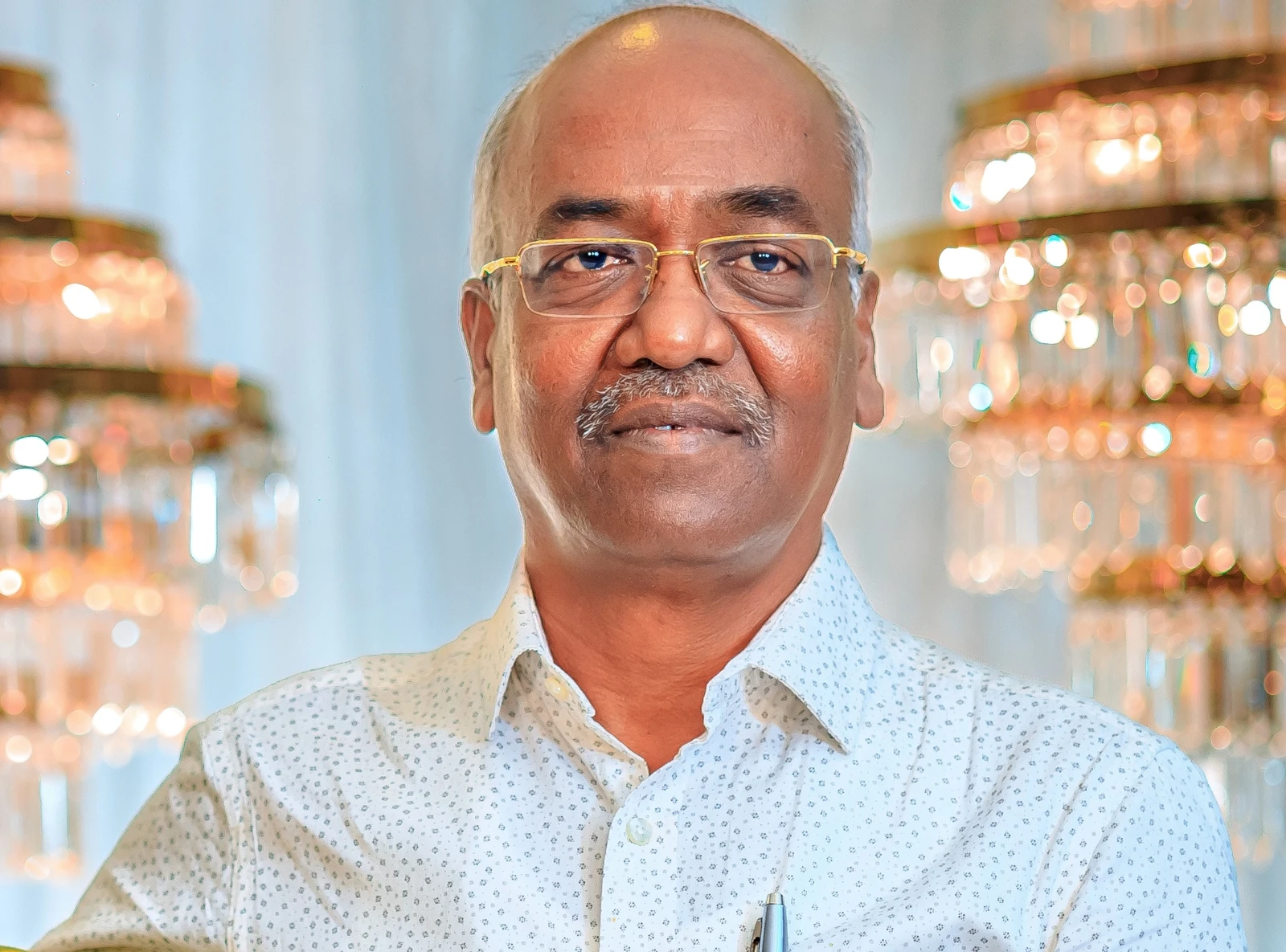
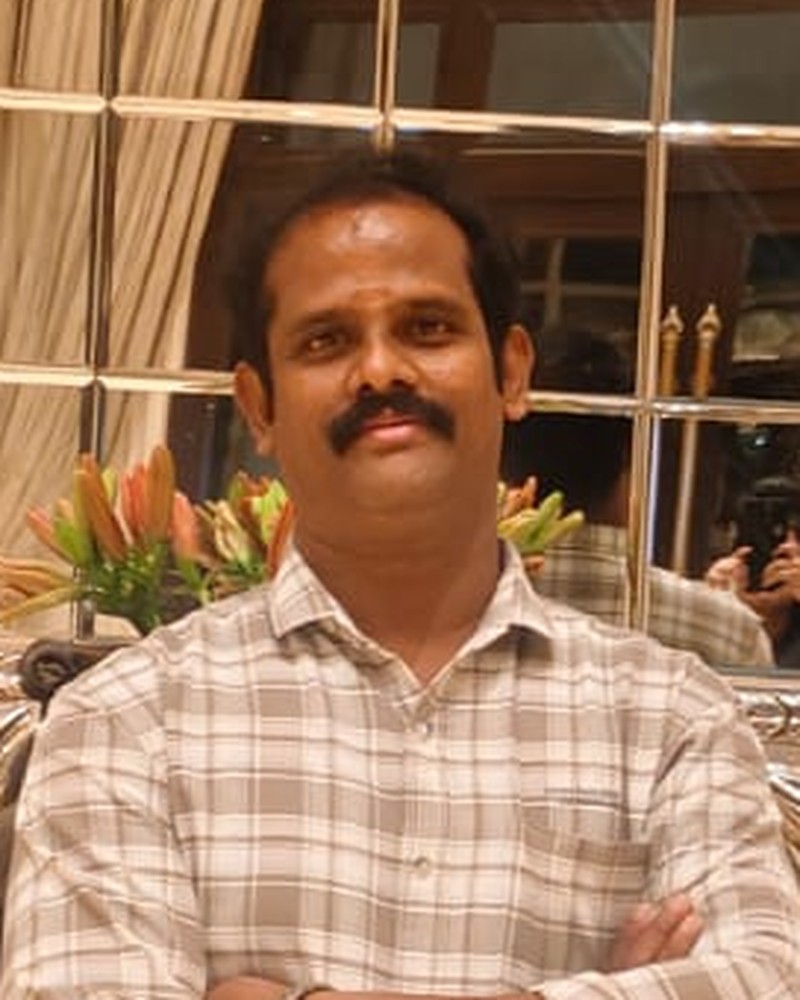
G. B. Ponmanivannan
President & Trustee
With over 36 years of professional experience, his work spans technology, innovation, organisational leadership, CSR, sustainability initiatives and industry–academia engagement. His long-standing interests include heritage, traditional knowledge, systems thinking and community stewardship.
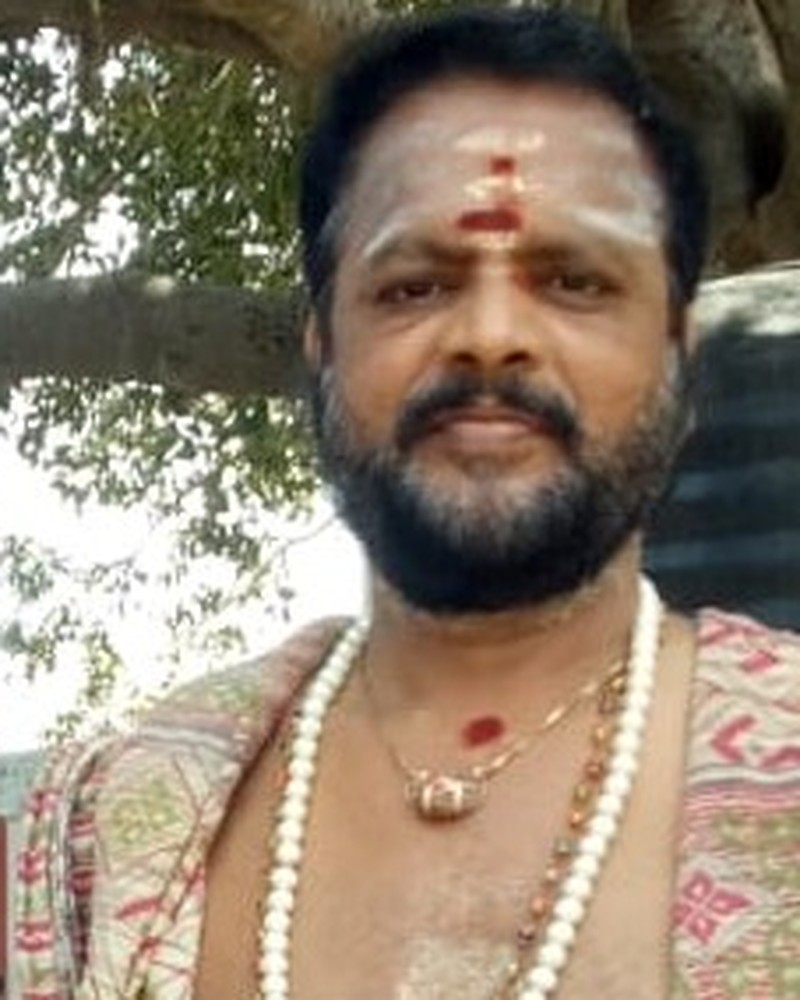
Shivakumar Muthusamy Gurukkal
Treasurer
Shivakumar Muthusamy Gurukkal studied Agama and Vedic traditions under Sri Chandrasekhara Ganapadigal, Hyderabad. He was selected by the Kanchi Mutt under the guidance of Sri Chandrasekarendra Saraswathi (Mahaperiyava) to perform pooja at Sri Kamakshi Amman Temple. He was later appointed as the priest of Sri Arulmigu Agatheeswarar Tripura Sundari Ambal Temple, Nedungundram.
E. Mahendran
Secretary
A practising advocate providing legal advisory and consulting services, with a focus on property-related matters. He brings legal perspective and practical guidance to the Trust’s governance, documentation and related activities.
Registered public charitable trust under Indian law · Proper books, audit and receipts for every gift · Projects only with the consent of the owner or authority of the site · Advisors and partners listed here as they join.
Take less. Give back. Leave room.
Use less water, energy and land. Give back to the land and to people. Leave room for trees, water and every other living being.
What we leave behind
Let’s ensure water and resources for future generations
Live well. Enable others to live well. Use resources wisely. Regenerate what sustains life.
We welcome enquiries about research collaboration, government and community partnerships, CSR, local sustainability projects, sacred heritage and water stewardship, technology pilots, knowledge contributions and volunteering.
Agastheeswarar Arapani Arakattalai No. 8/198, Eswaran Kovil Street Nedungundram, Chennai – 600127 Tamil Nadu, India